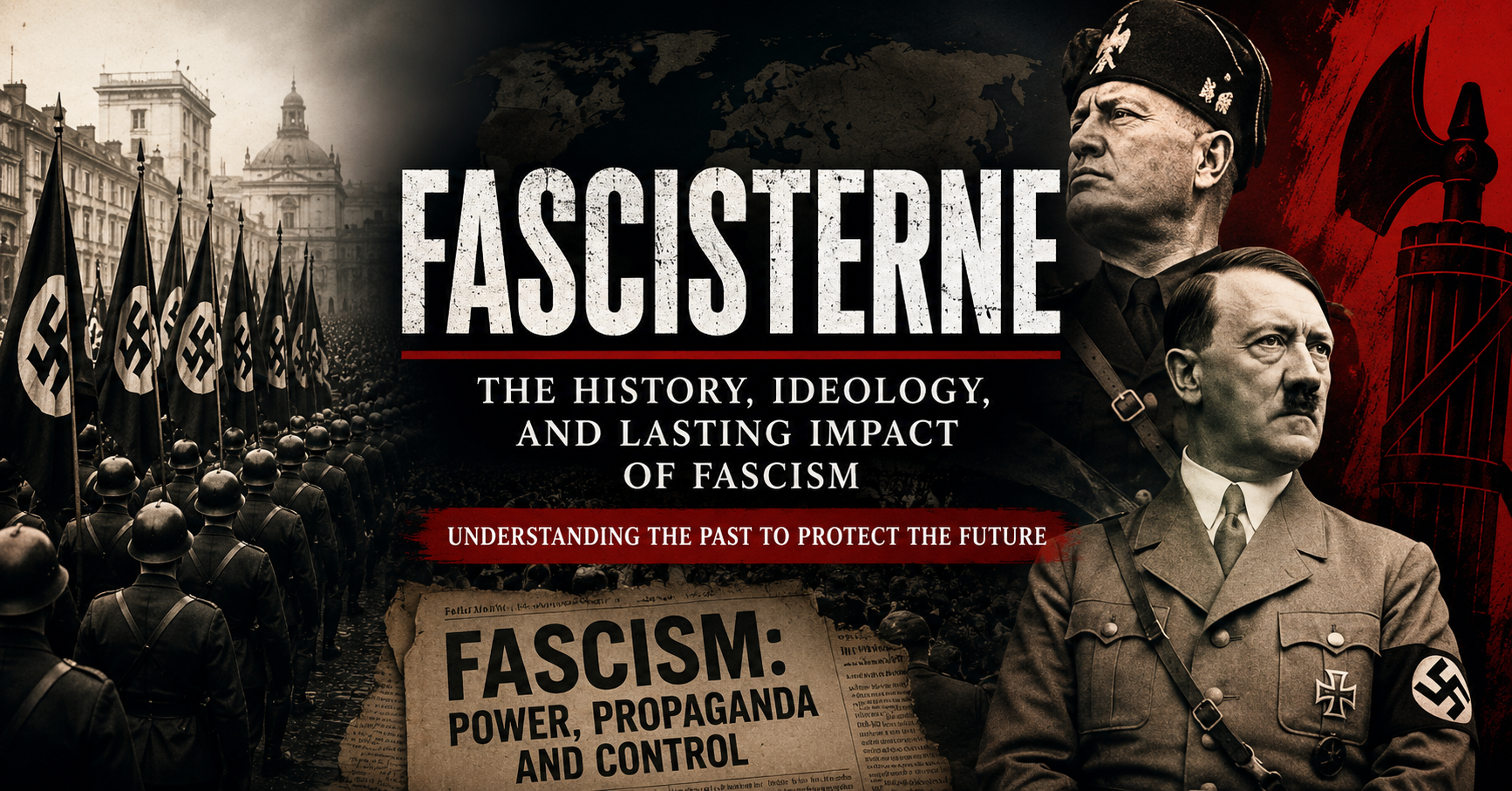
Fascisterne: Meaning History Ideology Symbols and Modern Relevance
Fascisterne continues to attract attention in political discussions, historical research, and online searches. Although the word is rooted in events that occurred nearly a century ago, it remains highly relevant in modern conversations about democracy, nationalism, political power, and social control. Many people encounter the term in news articles, documentaries, books, or social media debates and wonder what it truly means.
Fascisterne is the Danish word for “the fascists.” While the translation may appear simple, the historical and political significance behind the word is far more complex. It refers to individuals and groups associated with fascism, an authoritarian political ideology that emerged in Europe during the early twentieth century. Fascism shaped some of the most important and tragic events in modern history, including dictatorships, wars, and large-scale human rights violations.
Understanding Fascisterne is important because it helps us recognize how political movements gain influence during times of crisis. It also provides insight into the dangers of unchecked authority, propaganda, and extreme nationalism. By studying the rise, beliefs, and impact of Fascisterne, we can better understand both the past and the challenges facing democratic societies today.
What Is Fascisterne?
The word Fascisterne is the definite plural form of the Danish word “fascist.” In English, it translates directly to “the fascists.” It refers to specific individuals or groups who support fascist ideology or belong to fascist movements.
The term is most commonly associated with political organizations that emerged in Europe during the period between World War I and World War II. These movements advocated strong centralized authority, nationalism, and loyalty to a powerful leader. Fascisterne believed that the interests of the nation should take priority over individual freedoms and political pluralism.
Unlike democratic systems, which encourage debate and political competition, fascist movements generally sought to eliminate opposition and create a unified society under one ruling authority. Because of this, the term Fascisterne carries strong historical and political significance.
Origin of the Word Fascisterne
To understand Fascisterne fully, it is necessary to examine the origins of the word itself.
The term originates from the Italian word fascio, meaning “bundle” or “group.” The concept was inspired by the ancient Roman symbol known as the fasces, a bundle of wooden rods tied together around an axe. In Roman society, the fasces symbolized authority, strength, and unity.
The symbolism was straightforward: a single rod could easily be broken, but many rods bound together were much stronger. Fascist leaders adopted this imagery to promote the idea that citizens should unite under one nation, one state, and one leader.
As the fascist movement developed in Italy, the word fascismo became associated with Benito Mussolini’s political ideology. Those who supported the ideology became known as fascists. In Danish, these followers came to be called Fascisterne.
Historical Background: Conditions That Led to Fascisterne
The rise of Fascisterne cannot be understood without examining the social and economic conditions that existed after World War I.
The war left much of Europe devastated. Millions of people had died, economies were damaged, and political systems faced unprecedented challenges. Many citizens felt disappointed by traditional governments and questioned whether democratic institutions could solve their problems.
Several factors contributed to the growth of fascist movements:
Economic Instability
Many countries struggled with inflation, unemployment, and financial crises. Ordinary people faced uncertainty and hardship, creating an environment where radical political solutions gained appeal.
Political Chaos
Governments frequently changed, and many democratic systems appeared weak or ineffective. Citizens often felt that politicians were unable to restore order.
National Humiliation
Countries that experienced military defeat or political instability developed feelings of resentment and frustration. Fascist leaders promised to restore national pride and strength.
Fear of Social Change
The rise of socialist and communist movements created anxiety among certain groups. Fascist organizations presented themselves as defenders of national traditions and social stability.
These conditions created fertile ground for the emergence of Fascisterne across Europe.
Rise of Fascisterne in Italy
The modern fascist movement began in Italy under the leadership of Benito Mussolini.
Following World War I, Italy experienced economic difficulties, political unrest, and widespread dissatisfaction. Many Italians believed that their country had not received the rewards it deserved after the war.
In 1919, Mussolini founded the Fascist Party and promoted a vision of national renewal. He argued that Italy needed a strong government capable of restoring order, discipline, and national pride.
His movement attracted support from various segments of society, including business owners, veterans, and citizens concerned about political instability.
Mussolini’s rise to power accelerated in 1922 during the famous March on Rome. Facing growing pressure, the Italian king appointed Mussolini as prime minister.
Once in office, Mussolini gradually dismantled democratic institutions and established an authoritarian regime. Opposition parties were suppressed, independent media faced restrictions, and political power became concentrated in the hands of the state.
This marked the beginning of Fascisterne as a governing force rather than simply a political movement.
Expansion of Fascisterne Across Europe
The influence of Fascisterne quickly spread beyond Italy.
Germany
The most significant example was Germany, where Adolf Hitler and the Nazi Party adopted many fascist principles. Although Nazism developed its own racial doctrines, it shared key features with fascism, including authoritarian leadership, extreme nationalism, propaganda, and suppression of opposition.
Spain
Under Francisco Franco, Spain developed an authoritarian system influenced by fascist ideas. Although Franco’s government differed from Italian fascism in certain respects, it shared many authoritarian characteristics.
Hungary and Other Nations
Various fascist-inspired movements emerged throughout Europe. While not all achieved power, they often promoted nationalism, anti-democratic politics, and strong leadership.
The spread of Fascisterne demonstrated how appealing authoritarian solutions could become during periods of uncertainty and social tension.
Core Ideology of Fascisterne
Although fascist movements varied from country to country, several core principles remained consistent.
Authoritarian Leadership
One of the defining characteristics of Fascisterne was the belief in a strong central leader. This individual was often portrayed as the embodiment of the nation and the ultimate source of political authority.
The leader’s decisions were rarely questioned, and loyalty became a central political expectation.
Extreme Nationalism
Fascisterne viewed the nation as the highest political value. National identity, unity, and strength were considered more important than individual rights or international cooperation.
This nationalism often led to hostility toward perceived outsiders or minority groups.
Rejection of Democracy
Fascist movements believed democratic systems were inefficient and divisive. They argued that political debate weakened national unity and prevented decisive action.
Instead of encouraging multiple viewpoints, Fascisterne sought centralized control and political conformity.
State Above the Individual
Individual freedoms were often considered secondary to the needs of the state. Citizens were expected to sacrifice personal interests for national goals.
Education, media, culture, and public life were frequently organized to support state objectives.
Militarism and Strength
Military power played an important role in fascist ideology. Strength, discipline, and sacrifice were celebrated as national virtues.
Many fascist governments invested heavily in military expansion and viewed conflict as a tool for achieving political objectives.
Main Beliefs Associated With Fascisterne
The practical beliefs of Fascisterne were rooted in their broader ideological principles.
These beliefs included:
- Loyalty to the nation above personal interests.
- Obedience to political authority.
- Support for centralized government power.
- Promotion of national unity.
- Suppression of political opposition.
- Control of information and public discourse.
- Emphasis on discipline and social order.
Supporters argued that these principles would create a stronger and more stable society. Critics, however, pointed out that such systems often resulted in oppression, censorship, and the loss of democratic freedoms.
Understanding these beliefs is essential because they formed the foundation of fascist movements throughout Europe and influenced some of the most significant political events of the twentieth century.
Conclusion
Fascisterne is more than a historical term. It represents a political ideology that influenced some of the most significant events of the twentieth century. Through nationalism, authoritarian leadership, propaganda, and centralized power, fascist movements reshaped nations and left a lasting impact on global history.
Studying Fascisterne is not simply an exercise in understanding the past. It is an opportunity to learn how societies respond to crisis, how political movements gain support, and why democratic values require constant protection. By examining the rise and fall of Fascisterne, we gain valuable insights that remain relevant in the modern world and help ensure that the mistakes of history are not repeated.